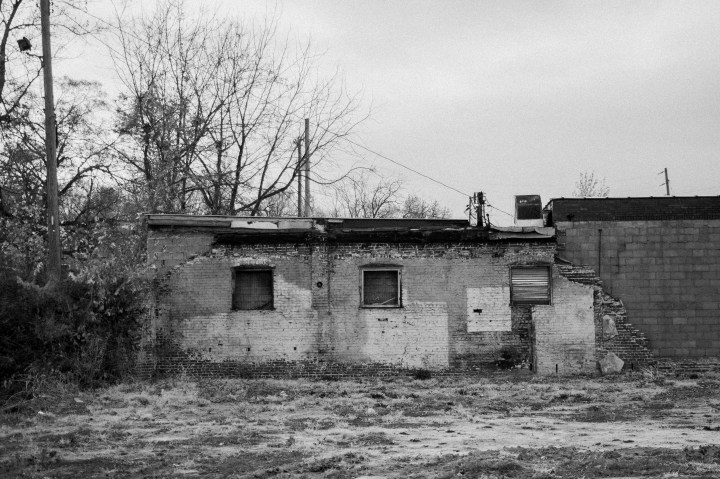
A Home for Baby

Taylor Knowles, M3, Class of 2025

Do you hear crying?
Demanded to move, she
Swallows belongings
And cradles her womb.
”This property is private, or didn’t you see?
You don’t belong near people like me.”

Without help, she scrambles alone
Packing the items that make up her home.
An ache finds her spine like the ache in her heart
For a place to exist and create a new start
But the feet in her womb push her on
Down this path.

Two miles pass and she drops to her knees, crying
In pain as she falls on the street.
Without any medicine, what can you do for a pain so engulfing it hurts just to move?
And yet, in the stillness, the baby won’t rest.

Do you hear crying?
As she’s helped from the ground, the pain overcomes her
But, also, this sound is the cadence and chorus of
Something so sweet—the sound of a battered soul
Finding relief.

I enter her room, my notebook in hand, noting the
Name on her hospital band.
She shares how painful recounting can be, and as
She details her past miseries
I remember we all are just human.

Blood tests and images unfold the truth:
Infections are sprouting in scars from her youth.
Bacteria runs from her heart to her bones and, just
As she does, continues to roam
In search of someplace a new life can survive.

More Than A Patient

Caroline St. Peter, MS3, Class of 2025

I am more than a patient.

I am more than a 90-year-old man with Parkinson’s disease and dementia. I am more than a widow. I am more than a man without his high school degree. I am more than a recovering alcoholic, and I am more than a helpless patient in the hospital.

I am a father, a grandfather, and a great grandfather. I have 3 kids, 2 of which are still living and involved in my life. I am a veteran who spent 30 months in Panama during the Korean war. I am a writer and a reader of fiction. I am a lover and a joker. I am survivor of alcohol misuse disorder who turned my life around, and I am a man with a story to share with the world.

During his admission, this patient had deterioration of his mental cognition and physical strength, which was impacting his nutritional status. His barrier to being discharged was ensuring he had enough nutrition and strength to go to a rehab facility. Attempts at medical interventions, such as a G-tube and appetite stimulants were unsuccessful, and the ultimate treatment ended up being personal engagement. We found out he had trouble concentrating and remembering to eat, and this is why he wasn’t doing so. Therefore, we shaped his care to focus on motivating him to eat with company and verbal encouragement. When I cared for him, I brought food from the floor to share with him in his hospital room, providing him with cues and companionship to enhance his care. As we sat and ate together, I asked him about his life, and he shared vast stories and immense wisdom I will always remember.

As an author, he encouraged me to write something down every day, even if it’s “boring or smart” so that I can have an account of my own story and how I see the world through my perspective. During our conversations, there were many instances where he found himself reflecting on previous experiences, such as his time in war and receiving help for his alcohol use disorder. Through this he showed me that no matter what stage of life or mental state you are in, to be grateful for what you have been through in life and reflect on that often. The past shapes who you are but does not define you. He also emphasized the importance of finding the joy in each day, no matter what the circumstances. He was vulnerable in the hospital and still focused on finding positives and continuously thanked us for our work. My time with this patient truly showed the impact that we as physicians have on our patients when we treat them as humans and the everlasting impact that patients have on us.

when does the work end?

Aroog Khaliq, M3, Class of 2025

8 o’clock in the morning watching a red moon
blossom on a woman’s neck, holding open the
edges for the carpenters to saw and scrape, to
heal the way they know how—tiny blades, tinier
forges. the small, hurried movements of their
wrists a dance i cannot mimic with any grace,
and there is no room to stumble, not here.

10 o’clock in the morning, my own gloves stained
with blood from my little blunt efforts, retracting
that little moon into fullness, then snipping it into
an eternal crescent. the case is not yet over, even
when the deft hands still and away. still, there are
my bloody gloves, a woman under blue drapes,
wet and dry cloths on her sweet, slumbering face.

10:07, and i find my own deftness in the gentlest
touch, cloth wiping away orange iodine stains
around even the nares. good morning, ma’am—
you were here, and i, too, took care of you.

I Don’t Have Time

I Don’t Have Time

Simon Longhi, M3, Class of 2025

I don’t have time.

I happened upon my two life roads
that diverged in a wood
so much later than I’d prefer.
It’s an echoey, reverberating–…
… –Err, berating, thing
that whirrs
like a sputtering motor
within my mind. Mulling
over so much, missed, in life.
I still want to reach, proverbial peace.
Keep, my sense of wonder.
Find, finally, someone to love.
But the wind that blows
down that sort of road,
could I even let,
that,
carry me?
Is that allowed?
Because to career, careen, down
–Medicine–, that path,
my calling, as a healer, now–
shouldn’t that demand in me, most everything?

I don’t have time.

Continue reading “I Don’t Have Time”

Your Life is Now

Your Life is Now

Riley Burghart, Nurse Anesthesia, Class of 2026

I think we all have moments in our lives, myself included, where we are constantly running around chasing our dreams thinking, “If I can just get/do/be this, THEN I’ll be content.” Working as an ICU nurse, I learned very quickly that many individuals do not ever slow down to be grateful for the small blessings they have until those blessings are taken away. Though these thoughts are part of the human condition, I challenge you to change your mindset. There will always be more things to do, be, and achieve. But you only have one “today.” 

Continue reading “Your Life is Now”

Diamonds in the Rough: Working as a Track Coach at an Inner-City High School while in Medical School

Diamonds in the Rough: Working as a Track Coach at an Inner-City High School while in Medical School

Liam Lynch, M2, Class of 2026

“Going to track practice every day was my escape from the monotony of medical school.
Going to track practice was their escape from things much worse.”

If you’ve met me, you know that running has been and will always be one of the most
pivotal parts of my life. It’s the reason I went to college, the reason for my drive and fortitude in
life, and an integral part of my daily routine. My yearly vacations center around where I’ll be
racing next and even my med school research revolves around running. In short, running is
intimate and intertwined with who I am.


Thus to me, nothing would be more worthwhile than giving back to the sport that has
gotten me to where I am today: Track & Field. We’ve all heard that volunteering in medical
school is one of the most crucial extracurriculars. Residencies will want to see a physician who
cares about their community and someone who gives without expecting anything in return. The
conclusion seemed natural; I was going to volunteer as an assistant track coach somewhere.


I reached out to many nearby Kansas City high schools: Shawnee Mission East, North,
and Bishop Meige. Bluntly put, these were the rich schools; they had the infrastructure and
funding to allow me to volunteer on a come-and-go basis. They didn’t need me at these rich
suburban schools but would take me and let me pad my resume.


Wyandotte was different though. Despite the strong, caring, and capable leaders I
encountered, decades of gentrification, rezoning, and defunding had led to its steady decline.
According to U.S. News & World Report, Wyandotte High School consistently ranks in the
bottom 20th percentile in all metrics for Kansas, ranking in the 2%, 3%, and 7% in math,
reading, and science proficiency, respectively. Freshmen make up 42% of their enrollment while
graduating seniors make up only 15%. The total minority enrollment is 98%, and 90% of
students are economically disadvantaged. Suffice to say, this school was very different from the
ones I grew up with and the other schools I was looking to volunteer at.


Wyandotte’s process was different, too. Head Coach Richie Bryant invited me for an
interview, which was something none of the other schools asked for. I figured that being an ex-
collegiate athlete turned medical student was qualification enough to volunteer—all the other
schools thought so too—but I agreed to an interview nonetheless. At the very least, it would
make my decision of where to volunteer easier.


I arrived at Wyandotte, passing the police officers and metal detectors stationed at the
entrance; it was already a stark difference from my own high school days. We went through
hallways displaying the trophies and banners of the school’s glory days that only those old
historic schools have. Then, after meeting Coach Keegan and Mr. Black, we sat down in the
bleachers of their basketball gym.

Continue reading “Diamonds in the Rough: Working as a Track Coach at an Inner-City High School while in Medical School”

The Way We Remember

Cecile Hermanns, M1, MD Class of 2026

I met RM in September of last year. We were paired together as part of a yearlong program where medical students meet with dementia patients and learn from their experience. We ended up meeting in her kitchen on Saturday mornings, sitting at the kitchen table and drinking coffee.

RM has early-stage dementia. She was able to tell me about her life and remember details about mine. I received some phone calls about our plans – what cookies had we decided to bake? When was I out of town? – but overall, our conversations were like any others. Except I was surprised by the depth of familiarity we reached with one another in such a short time, the way she felt comfortable sharing anything and everything with me. As a medical student I could tell that I was perceived as someone confidential, a person to confide in and trust. 

Continue reading “The Way We Remember”

Luster

Luster

Maddy Mash, MD Class of 2025

Stress, anxiety, heavy feelings, whatever you want to call it, come with a potency that overwhelms our mind, influencing every decision and the way we perceive the world. 

I have noticed I tend to look back on challenging stretches of life and think, that wasn’t so bad. Time gives us a lens with the blurring stress filter removed, giving a romanticized picture of the seemingly lackluster moments you overlooked. When this appreciation comes, all those moments are far gone, wasted on a overextended and burnt out mind probably because something wasn’t working out exactly the way we wanted it to at the time. 

Continue reading “Luster”

Hibernal Reflection

Hibernal Reflection

Trenton Edwards, M2, Class of 2025

Soon, our northern hemisphere will enter into Winter. The sun sets earlier and its warmth fades, sending trees, bears, and countless others into hibernation. In doing so, these creatures can recover from a year’s worth of wear and tear and rest in anticipation of Spring’s growth. As we too retreat indoors, we are also given a chance to look inward; an opportunity to reevaluate our relationship with others, with nature, and with ourself. Winter provides space to think about what has been left behind and what lays ahead. It gives us a chance to be more intentional about those we spend time with, and to witness those who choose to spend their time with us. Though this season may evoke feelings of loss and isolation, it is time spent alone which allows for reflection and growth. As we approach our annual chrysalis, may we put in the work necessary to emerge reborn.

Continue reading “Hibernal Reflection”