The Slide

Liam Lynch, MD Class of 2026

“I woke up after a nap one day with quite a bit of inspiration, so immediately I went to write this short story.”

“Welcome to Summer Camp,” the sign read. The excitement was palpable; the lot of us were all clamored together in that first courtyard. No one here had been to camp before, despite everyone being different ages. From the younger middle-schoolers, to the older of us high-schoolers, everyone was witness to the halcyon summer about to unfold. I knew going in that it was a goal of the summer camp to grow the older campers into leaders so that they’d come back the next year as counselors, and quite frankly, I was all-too-naïve and looking forward to the recognition and responsibility that would soon come with it. As we waited for the counselors to join us, I took in the moment.

Continue reading “The Slide”
Can A Fish Teach Medicine?

Adam Wilson, M1, Class of 2026

How can a fish teach medicine, how does diabetes result from environmental contamination, and how does environmental contamination cause illness through biological and non-biological mechanisms? I recently read “The River Is in Us: Fighting Toxics in a Mohawk Community” by Elizabeth Hoover, which prompted these questions. Hoover describes the impact of contamination and disruption of a Native American community’s environment located at Akwesasne along the St. Lawrence Seaway and bisected by the U.S.-Canada border. Akwesasne is downwind and downriver from a few sites, such as Reynolds Metals and General Motors Central Foundry, recognized as particularly hazardous to human and environmental health by federal and state governments. As a foreword, the Mohawk community at Akwesasne has a long history that this article cannot do justice to. I highly recommend reading Hoover’s book for more information on historical and cultural contexts.

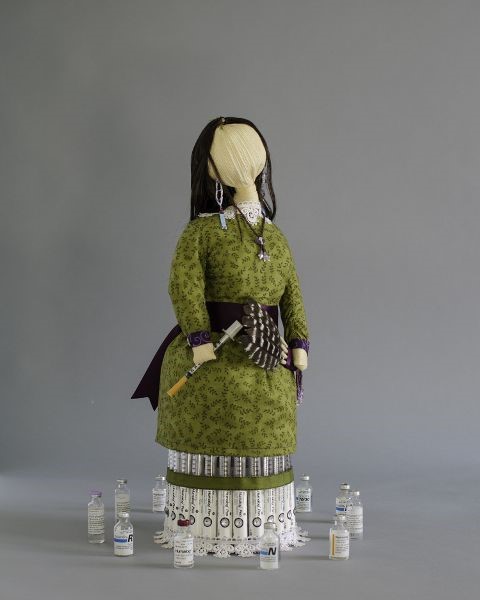
Sculpture by Akwesasne Mohawk artist Natasha Smoke Santiago, depicting a traditional Mohawk woman made from corn husks, insulin bottles, and hypodermic needles. This piece represents the rapid increase of cases of diabetes in the Akwesasne community, with the corn husks symbolizing the traditional foods that the artist wants her relatives to return to in order to regain their health. Photograph by Jessica Sargent. Caption by Elizabeth Hoover.
Continue reading “Can A Fish Teach Medicine?”